
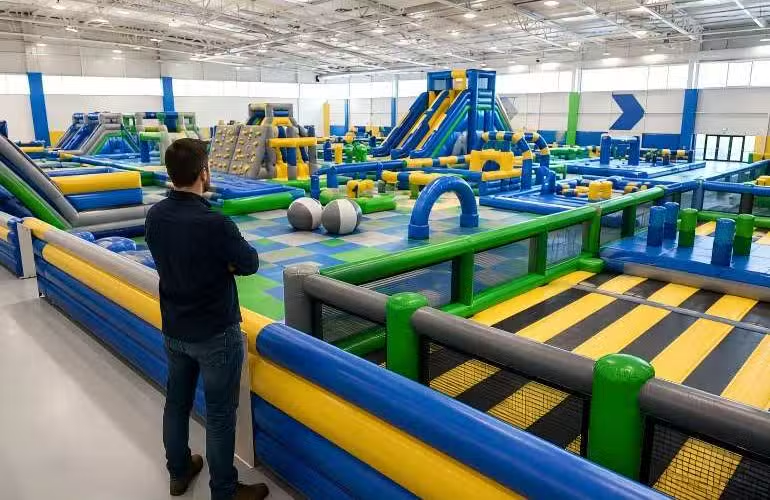
Buying a commercial inflatable park is about much more than choosing the biggest slides or comparing the lowest quotations. The decisions made before production begins can influence everything from installation and daily operations to maintenance costs and future expansion.
Many of the most expensive mistakes aren’t discovered until after the inflatable park has been delivered. Fortunately, most of them can be avoided with careful planning.
Whether you’re opening a family entertainment centre, expanding a rental business, or developing a new attraction, understanding these common mistakes can help you make a more confident investment.
1. Choosing Based on Price Alone
One of the most common mistakes is making a decision based solely on the lowest quotation.
While staying within budget is important, the cheapest option doesn’t always offer the best long-term value.
Lower prices may reflect compromises in material quality, reinforcement, manufacturing standards, or after-sales support. These differences might not be obvious when the park is brand new, but they can lead to more repairs, increased downtime, and higher operating costs over time.
Instead of comparing prices alone, consider the overall quality, durability, and long-term value of the inflatable park.
2. Not Planning the Available Space Properly
An inflatable park may look impressive in a proposal but still be unsuitable for the actual site.
Before finalising a layout, carefully evaluate:
- Total installation area
- Indoor ceiling height (if applicable)
- Safety clearance around the equipment
- Entrance and exit locations
- Space for blowers and maintenance access
Planning these details early helps prevent costly design changes or installation challenges later.
3. Selecting Attractions Without Understanding Your Audience
Not every inflatable attraction appeals to the same visitors.
A layout designed for preschool children will be very different from one intended for teenagers or family entertainment centres.
Before choosing activities, consider:
- Target age groups
- Expected visitor numbers
- Average visit duration
- Local market demand
- The overall visitor experience
A well-balanced combination of slides, obstacle elements, climbing features, and interactive games often provides a better experience than simply choosing the biggest attractions available.
4. Overlooking Daily Maintenance
Some buyers assume that a commercial inflatable park requires very little maintenance after installation.
In reality, regular care is essential for maintaining safety, appearance, and long-term performance.
Daily inspections, routine cleaning, prompt repairs, and proper storage all help reduce operating costs while extending the service life of the equipment.
Maintenance should be viewed as part of normal business operations rather than an occasional task.
5. Forgetting About Future Expansion
Many successful inflatable parks don’t remain the same forever.
As visitor numbers grow, operators often choose to add new attractions or expand existing layouts.
Planning ahead can make future expansion much easier. Consider whether your initial design leaves room for:
- Additional obstacle sections
- New slides
- Interactive attractions
- Increased visitor capacity
Thinking beyond today’s requirements can save both time and money as your business develops.
6. Overlooking Day-to-Day Operations
A visually impressive inflatable park isn’t always the easiest one to operate.
Daily efficiency has a direct impact on both customer satisfaction and staff workload.
Before confirming a layout, ask yourself:
- Can visitors move through the park smoothly?
- Are entrances and exits easy to supervise?
- Is there enough space for staff to monitor activities safely?
- Can the equipment be cleaned and maintained without difficulty?
A practical layout often delivers a better overall experience than one designed purely for appearance.
7. Not Asking About After-Sales Support
Purchasing an inflatable park is the beginning of a long-term relationship with the manufacturer—not the end of it.
Before placing an order, it’s worth asking questions such as:
- Are repair materials included?
- Can replacement parts be supplied if needed?
- Is technical support available?
- Will operating guidance or layout drawings be provided?
Reliable after-sales support can save valuable time if questions or unexpected situations arise in the future.
Don’t Forget Transportation and Installation
Transportation and installation are sometimes overlooked during the buying process.
Before production begins, confirm practical details such as:
- Shipping method
- Package dimensions
- Total shipment weight
- Unloading requirements
- Installation time
- Storage space
Understanding these requirements in advance helps avoid unexpected delays or additional costs once the equipment arrives.
Take Time Before Making the Final Decision
Buying a commercial inflatable park is a significant investment, so it’s worth taking the time to compare options carefully.
Review layouts, ask questions, discuss your business goals with the manufacturer, and think beyond the initial purchase price.
A well-planned decision is far more likely to deliver long-term value than one made simply because it seemed quicker or less expensive.
Final Thoughts
Every successful commercial inflatable park begins with careful planning.
While every project is different, avoiding a handful of common mistakes can make a significant difference to long-term performance, operating efficiency, and customer satisfaction.
Rather than focusing on a single factor such as price or appearance, look at the complete picture—including quality, layout, maintenance, future expansion, and after-sales support. Making informed decisions before production begins will help you build an inflatable park that continues to deliver value for years to come.